If you often deal with stomach cramps, bloating, or sudden runs to the bathroom, you are not alone. When looking for answers online, two health abbreviations pop up all the time: IBS and IBD.
Even though they sound almost identical and share similar symptoms, they are completely different medical issues. Mixing them up can lead to the wrong treatment and delay your recovery. At Kaizen IBD care, our dedicated IBD clinic in Wakad, Pune, our expert team—featuring Dr. Vikrant Kale (IBD Specialist) and Dr. Samrat Jankar (Colorectal Surgeon & IBD Surgeon)—is here to help you understand your gut and get the right treatment.
What Is IBS?
To understand IBS, let’s start with the basics. The medical abbreviation IBS stands for Irritable Bowel Syndrome.
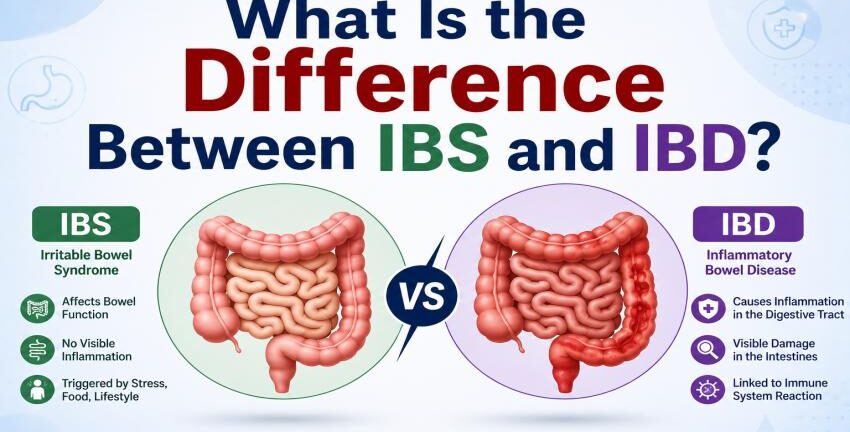
In simple terms, IBS is a functional gut problem. This means that your digestive system looks completely normal on medical tests, but it is not working the way it should. The nerves and muscles in your gut are just extra sensitive.
What Having IBS Means for You?
Having IBS means your brain and your gut are not communicating smoothly. This miscommunication causes the muscles in your intestines to squeeze too hard or too slowly, leading to pain and irregular bathroom habits.
If you are worried and wondering, “Is IBS a dangerous disease?”, the reassuring answer is no. IBS is not dangerous or life-threatening, and it does not lead to cancer or cause permanent damage to your body. However, it can certainly be stressful and disruptive to daily life.
Why IBS Happens?
Doctors do not have one single answer for why IBS happens, but it is usually caused by a combination of these everyday factors:
- Sensitive Nerves: The nerves in your gut feel pain and gas bubbles much more intensely than other people’s do.
- Gut-Brain Stress: Stress, worry, and anxiety do not directly create IBS, but they easily trigger or worsen your stomach symptoms.
- Post-Infection Changes: Sometimes, a bad case of food poisoning or a stomach bug can leave your gut sensitive for months or years.
What Is IBD?
While IBS is just a functional issue, IBD is a physical disease that causes real structural damage. The abbreviation IBD stands for Inflammatory Bowel Disease.
When doctors talk about IBD, they mean that your body’s immune system is mistakenly attacking your own digestive tract. This constant attack causes deep swelling, sores (ulcers), and bleeding. IBD mainly includes two different conditions:
- Crohn’s Disease: This type of IBD can cause inflammation anywhere from your mouth down to your anus. It often shows up in patches and can damage the deep layers of your intestinal walls.
- Ulcerative Colitis: This type only affects the large intestine (colon) and the rectum. It causes continuous sores along the inner lining of the gut.
IBS vs IBD: Key Differences
Symptoms Comparison:
It is easy to get confused between these two because both irritable bowel syndrome and abdominal pain go hand-in-hand, just like IBD does. However, looking closely at your symptoms can give you major clues.
Common Symptoms (Both IBS and IBD):
- Stomach cramps and pain
- Sudden urges to use the bathroom
- Diarrhea, constipation, or switching between both
- Bloating and gas
Red Flag Symptoms (IBD Only):
Unlike IBS, IBD causes visible signs of sickness that affect your whole body. Important symptoms—including common inflammatory bowel disease symptoms in women and men—are:
- Blood in your stool: This happens because of bleeding sores in the gut and is never caused by IBS.
- Unexplained weight loss: Your body cannot absorb food properly because the gut lining is damaged.
- Fevers and fatigue: Your body is exhausted from constantly fighting internal inflammation.
Diagnosis: How Medics Tell Them Apart?
You cannot tell the difference between IBS and IBD just by how your stomach feels. You need a medical expert to check inside. At Kaizen IBD care, we use clear, simple tests to find out exactly what is wrong:
- Stool and Blood Tests: Simple blood tests look for signs of a fight in your body. A special stool test checks for a protein called calprotectin. If this protein is high, it means you have IBD inflammation; if it is normal, it points to IBS.
- Colonoscopy: A tiny camera is used to look directly at the lining of your gut. If the specialist sees smooth, healthy tissue, it confirms an IBS diagnosis. If they see ulcers, it points to Crohn’s disease or ulcerative colitis.
Treatment & Management:
Because the root causes are so different, the treatments are completely different too.
How IBS is Treated?
Since there is no disease to cure, IBS treatment focuses entirely on calming your gut and relieving pain:
- Food Changes: Avoiding foods that cause gas, or trying a temporary low-FODMAP diet.
- Stress Relief: Getting regular sleep, practicing relaxation, and staying active to calm the gut-brain connection.
- Medicines: Simple pills to stop stomach muscle spasms, relieve pain, or manage diarrhea and constipation.
How IBD is Treated?
IBD treatment focuses on calming an overactive immune system and healing the physical damage:
- Advanced Medications: Anti-inflammatory pills, steroids, or modern biological therapies that stop the immune system from attacking your gut.
- Expert Surgery: If the gut becomes blocked or badly damaged, a highly trained professional like Dr. Samrat Jankar (Colorectal Surgeon & IBD Surgeon) can safely perform surgery to remove the damaged sections.
- Regular Monitoring: Ongoing checkups at a specialized clinic like Kaizen IBD care ensure your gut stays healed and you avoid future flare-ups.
Conclusion:
Even though their names sound almost the same, IBS and IBD are completely different worlds. IBS is an uncomfortable, sensitive gut issue that won’t cause permanent harm. IBD is a serious condition involving internal swelling and sores that needs dedicated medical care.
If you are dealing with constant stomach trouble, stop guessing and struggling alone. Reach out to us at Kaizen IBD care in Wakad, Pune. Our expert doctors, Dr. Vikrant Kale and Dr. Samrat Jankar, are ready to help you find the right answers and build a simple treatment plan so you can live comfortably again.