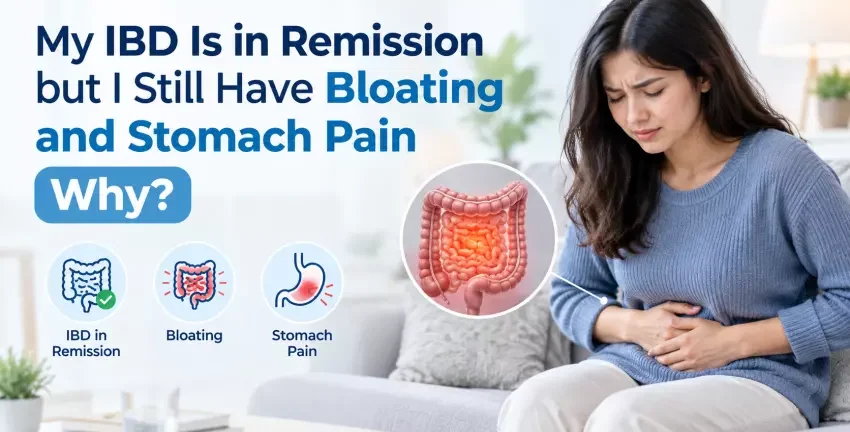
If you have Crohn’s disease or ulcerative colitis, you may feel relieved when your doctor says that your IBD is in remission. But what if you still have bloating, gas or stomach pain?
This can be confusing. You may wonder, “If my IBD is in remission, why do I still have symptoms?”
The good news is that these symptoms do not always mean that your IBD is active again. There can be many other reasons for bloating during IBD remission and stomach pain.
This blog is written by Dr. Vikrant Kale, IBD Specialist and Senior Gastroenterologist at Kaizen IBD Care. With over 18+ years of experience in gastroenterology and specialised training in Inflammatory Bowel Disease from Oxford University, UK, Dr. Vikrant Kale focuses on accurate diagnosis and long-term IBD care.
In this blog, Dr. Vikrant Kale explains the common reasons for bloating and stomach pain during IBD remission, the symptoms you should not ignore, and when you should consult an IBD specialist.
What Does IBD Remission Mean?
IBD remission means that there is little or no active inflammation in the intestine. Your symptoms may be much better, and tests may show that the disease is under control.
However, remission does not always mean that you will have zero digestive symptoms.
Some people can still have gas, bloating, constipation or abdominal discomfort. These are known as IBD remission symptoms.
Your symptoms should still be discussed with your doctor if they continue for a long time or become worse.
Can You Have Symptoms Even When IBD Is in Remission?
Yes. You can have symptoms even when your IBD is in remission.
For example, stomach pain during IBD remission may happen because of constipation, food intolerance, IBS, changes in gut bacteria or other digestive problems.
Some people with IBD may also develop IBS-like symptoms after their bowel inflammation has improved. This is sometimes called post-inflammatory IBS.
So, having bloating or stomach pain does not always mean that you are having an IBD flare.
Common Reasons for Bloating and Stomach Pain During IBD Remission:
There is rarely one single reason. These are the common ones:
- Post-inflammatory IBS: Past inflammation makes gut nerves very sensitive. This causes functional abdominal pain even without active disease. This is also called IBS with IBD.
- SIBO: Small intestinal bacterial overgrowth causes gas, bloating and loose motions. SIBO and IBD can occur together, especially after surgery or narrowing of the gut.
- Food intolerance: Food intolerance and IBD often go together. Lactose (milk sugar) is a common problem.
- Narrowing of the gut: In Crohn’s disease, old inflammation can leave scars. This causes cramps after meals.
- Medicines and supplements: Some of them can upset the stomach.
- Stress and poor sleep: The gut and the brain are closely connected.
Foods That May Trigger Bloating During IBD Remission:
Food triggers are different for every person.
Some foods can cause more gas or bloating. Common examples include:
- Carbonated drinks
- Fried and oily foods
- Large amounts of beans or legumes
- Onions and garlic
- Milk, if you have lactose intolerance
- Artificial sweeteners
- Very large meals
- Some high-fibre foods
A personalised IBD remission diet can help you understand which foods suit your body.
You can also maintain a food diary. Write down what you eat and how you feel afterwards. This may help identify food triggers.
Can Constipation Cause Stomach Pain and Bloating in IBD?
Yes, it can. Many people miss this cause. Constipation is common in IBD, even during remission.
When stool is hard, it moves slowly and stays longer in the gut. Gas gets trapped behind it. This causes cramps, a heavy feeling and a swollen stomach.
Common reasons include:
- Less water and less fibre
- Low physical activity
- Iron tablets and some painkillers
- Narrowing of the gut in Crohn’s disease
Constipation can look like a flare, as both cause pain and bloating. A test like faecal calprotectin can help tell the difference.
Drink enough water, walk daily and eat soft fruits like papaya and banana. Please do not take strong laxatives on your own. Some are not safe if the gut is narrowed. Ask your doctor first. See a doctor if constipation lasts more than a week, or if you have severe pain, vomiting, blood in stool or weight loss.
When Should You Be Concerned About Stomach Pain During Remission?
Mild and occasional discomfort may not always be serious. But new or persistent symptoms should not be ignored.
You should speak to your doctor if you have:
- Increasing stomach pain
- Frequent loose motions
- Blood in the stool
- Unexplained weight loss
- Fever
- Repeated vomiting
- Severe tiredness
- Loss of appetite
- Symptoms that wake you at night
These symptoms may need further evaluation.
Symptoms That May Suggest an IBD Flare:
An IBD flare may cause symptoms such as:
- Frequent diarrhoea
- Blood or mucus in stool
- Increased urgency to pass stool
- Abdominal pain
- Weight loss
- Fever
- Increased tiredness
However, symptoms alone cannot always confirm an IBD flare.
This is why understanding IBD flare vs remission symptoms is important. Your doctor may recommend blood or stool tests to check for active inflammation.
How Doctors Evaluate Bloating and Abdominal Pain in IBD Remission?
If you have persistent symptoms after IBD remission, your doctor may first ask about your symptoms, medicines, diet and bowel habits.
Depending on your condition, the doctor may recommend different tests.
These tests can help identify whether your symptoms are due to active IBD or another digestive problem.
How to Manage Bloating and Stomach Pain During IBD Remission?
Managing bloating in IBD depends on the cause. First, your doctor will find out why you Managing bloating in IBD depends on the cause. First, your doctor finds out why you have bloating. Then the treatment is planned for you.
Treatment may include:
- Diet changes: Avoiding trigger foods for some time, under guidance
- Antibiotics for SIBO: A short course, if SIBO is confirmed
- Medicines for cramps: To relax the gut muscles
- Safe treatment for constipation: A gentle stool softener or fibre
- Stress control: Yoga, deep breathing or counselling
Never stop your IBD medicines on your own. Even in remission, they protect you from a relapse.
Diet and Lifestyle Tips to Reduce Bloating:
A balanced IBD remission diet helps many patients. Small changes in daily habits can make a big difference.
1. Eating habits:
- Eat small meals, four to five times a day. Large meals put pressure on the gut.
- Chew your food slowly. Do not talk while eating. This reduces swallowed air.
- Avoid skipping meals or eating late at night.
- Do not lie down immediately after food. Sit or walk for 15 to 20 minutes.
2. Food and drink choices:
- Keep a food and symptom diary. Note what you eat and how you feel. This helps you find your own triggers.
- Drink enough water through the day.
- Avoid cold drinks, soda and chewing gum. They add gas to the stomach.
- Choose cooked vegetables over raw salads if raw food bothers you.
- Include curd or buttermilk if you tolerate them well.
3. Lifestyle habits:
- Walk for 20 to 30 minutes daily. Light activity helps gas move out.
- Sleep for 7 to 8 hours.
- Manage stress with yoga or deep breathing.
- Avoid smoking. It can worsen IBD, especially Crohn’s disease.
Do not cut out too many foods. This can cause weakness, weight loss and lack of vitamins. Remove only those foods that clearly trouble you. A dietitian who understands IBD can guide you well.
When Should You See an IBD Specialist?
If you have bloating, stomach pain or abdominal discomfort during IBD remission, it is important to understand the actual cause. Occasional bloating may not be a serious concern, but persistent or worsening symptoms should not be ignored. They may be related to IBS, constipation, food intolerance or a return of active inflammation.
You should consult an IBD Specialist if you experience:
- Frequent bloating or ongoing stomach pain
- Persistent diarrhoea or changes in bowel movements
- Blood or mucus in your stool
- Unexplained weight loss or loss of appetite
- Regular constipation or difficulty passing stool
- Unusual tiredness or fever
Severe abdominal pain, repeated vomiting, significant abdominal swelling or inability to pass stool or gas may indicate a serious problem and require urgent medical attention.
Frequently Asked Questions About Bloating and Pain During IBD Remission:
Bloating can happen even when your IBD is under control. Common reasons include constipation, food intolerance, IBS-like symptoms and changes in gut bacteria. SIBO can also cause gas and bloating in some patients. Bloating alone does not always mean that your IBD is active.
Stomach pain during remission can have different causes. Constipation, IBS, food intolerance and gas can cause abdominal discomfort. Sometimes, functional abdominal pain can also continue after inflammation has settled. If the pain is frequent or getting worse, speak to your doctor.
Bloating alone does not confirm an IBD flare. An active flare usually has other symptoms such as diarrhoea, blood in stool, urgency or weight loss. If bloating continues or new symptoms appear, your doctor may recommend blood or stool tests.
Yes. Some people with IBD may also have IBS-like symptoms even when their IBD is in remission. These symptoms can include bloating, gas, stomach pain and changes in bowel habits. Your doctor can help identify whether the symptoms are due to IBS or active IBD.
Abdominal pain can continue for several reasons even after inflammation improves. Constipation, food intolerance, IBS-like symptoms, gas and SIBO are some possible causes. Proper evaluation can help find the actual reason for the pain.
Yes. Small intestinal bacterial overgrowth (SIBO) can cause excess gas, bloating and abdominal discomfort. Some patients may also notice changes in bowel movements. Your doctor can decide if SIBO testing or treatment is needed.
Certain foods may cause bloating, but triggers are different for each person. Carbonated drinks, fried foods, onions, garlic, some legumes and dairy products may cause problems in some people. Keeping a food diary can help identify your personal triggers.
Eat smaller meals and eat slowly. Drink enough water and stay physically active. Avoid foods that you know trigger your symptoms. If bloating or pain continues, consult your IBD Specialist for proper evaluation.
Conclusion:
Bloating and stomach pain can continue even when your IBD is in remission. These symptoms may be related to constipation, IBS, food intolerance, SIBO or other digestive problems. They do not always mean that your IBD has become active again.
If your symptoms continue or become worse, it is important to consult an IBD specialist. Proper evaluation can help find the cause and guide the right treatment.
At Kaizen IBD Care, Dr. Vikrant Kale provides specialised care for Crohn’s disease and ulcerative colitis, helping patients manage their condition and maintain long-term remission.