
IBD Diagnosis & Evaluation in Pune
Living with chronic stomach pain, frequent diarrhoea, or blood in stools is exhausting. But the harder part is not knowing what is wrong.
If you have been experiencing these symptoms for weeks or months, you may be dealing with inflammatory bowel disease — a condition that affects the digestive tract and needs proper evaluation to manage well.
At Kaizen IBD Care, Pune’s first fully dedicated IBD clinic, we follow a structured, evidence-based diagnostic process to identify your condition accurately. Early and correct diagnosis is the first step toward better health.
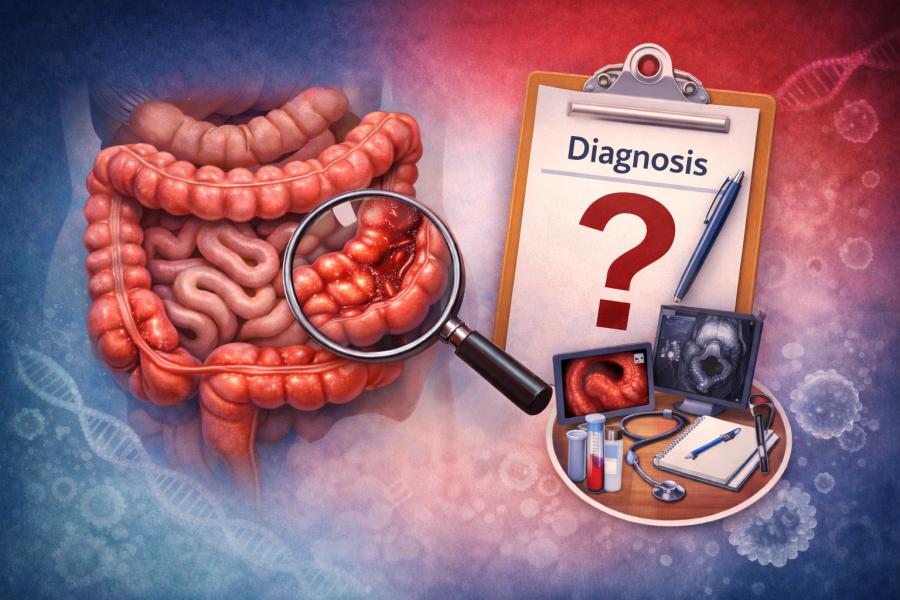
Understanding the Basics About IBD
IBD stands for Inflammatory Bowel Disease. It is a chronic condition where the immune system attacks the digestive tract, causing inflammation in the intestine. Many patients ask about IBDs meaning when they first hear the term. Simply put, IBD is an umbrella term for two main conditions — Ulcerative Colitis (UC), which affects the colon and rectum, and Crohn’s Disease, which can affect any part of the digestive tract. Unlike IBS, IBD causes real inflammation and can lead to lasting damage if left untreated. Common signs of bowel inflammatory disease to watch for:
- Loose stools or diarrhoea lasting more than 4 weeks
- Blood or mucus in stools
- Abdominal pain and cramping
- Sudden urgency to use the toilet
- Unexplained weight loss or constant fatigue
- Fever during flare-ups
- Joint pain, skin rashes, or eye irritation
If you have three or more of these symptoms, consult an IBD Specialist in Pune without delay.
Why Accurate Diagnosis Matters
IBD is often confused with other gut conditions — infections, IBS, or even simple food intolerances. Treating the wrong condition wastes time and worsens outcomes.
Accurate diagnosis helps:
- Confirm whether you have IBD or another condition
- Identify which type — Ulcerative Colitis or Crohn’s Disease
- Assess disease severity and extent
- Plan the right treatment from day one
- Prevent complications like strictures, fistulas, or surgery
At Kaizen IBD Care, our IBD specialists do not guess. We investigate.
The IBD Diagnostic Process at Kaizen IBD Care
There is no single test for IBD. Diagnosis is always based on a combination of findings. Here is how we evaluate every patient step by step.
Step 1 – Clinical Evaluation & Medical History
Your consultation begins with a detailed discussion. Our IBD specialist will ask about:
- Duration and nature of your symptoms
- Past illnesses, surgeries, and medications
- Family history of IBD or colorectal cancer
- Diet, travel history, and stress patterns
A thorough physical examination is done at the same time. This helps build the clinical picture before any test is ordered.
Step 2 – Blood Tests
Blood tests reveal inflammation markers and nutritional status. Key tests include:
- CRP (C-Reactive Protein) — elevated in active IBD
- ESR (Erythrocyte Sedimentation Rate) — indicates inflammation
- CBC (Complete Blood Count) — checks for anaemia
- Serum albumin — assesses nutritional health
- Vitamin B12 and iron levels — commonly low in Crohn’s patients
These tests alone cannot confirm IBD, but they give critical clues.
Step 3 – Stool Tests
Stool tests help distinguish IBD from infections and other conditions:
- Faecal Calprotectin — a highly sensitive marker for intestinal inflammation
- Stool Culture — rules out bacterial or parasitic infections
- C. difficile test — important to exclude infection-related colitis
Step 4 – Colonoscopy & Biopsy
Colonoscopy is the most important test in Ulcerative Colitis diagnosis and Crohn’s disease diagnosis.
During the procedure, a thin flexible camera is passed through the colon. The doctor can directly see:
- Inflammation, ulcers, and redness in the bowel lining
- The extent and pattern of disease
- Whether changes are continuous (typical of UC) or patchy (typical of Crohn’s)
Biopsies (small tissue samples) are taken from multiple sites — both inflamed and normal-looking areas. These are sent to a pathologist for microscopic analysis, which is essential to diagnose Ulcerative Colitis or diagnose Crohn’s Disease with confidence.
Step 5 – Upper GI Endoscopy
If Crohn’s Disease is suspected, an upper GI endoscopy (gastroscopy) may also be performed. Crohn’s can affect the stomach, oesophagus, and upper small intestine — areas a colonoscopy cannot reach.
Step 6 – Advanced Imaging
Imaging gives us a full view of the bowel — including walls, thickness, and areas outside the intestine.
- MRI Enterography (MRE): Preferred for evaluating the small intestine and perianal Crohn’s Disease. No radiation. Ideal for young patients and repeat monitoring.
- CT Enterography (CTE): Fast and detailed. Useful when strictures, fistulas, or abscesses are suspected.
- Intestinal Ultrasound (IUS): Non-invasive. No radiation. Provides real-time information about bowel wall thickness and disease activity. Increasingly used in clinics like Kaizen IBD Care for routine monitoring.
Step 7 – Histopathology Report
The biopsy samples are examined under a microscope by a specialist pathologist. The report confirms:
- Whether IBD is present
- Whether it is UC, Crohn’s, or Indeterminate Colitis
- Degree of inflammation and any cellular changes
This report, combined with endoscopy and imaging findings, gives the final diagnosis.
Diagnosing Different Types of IBD
1. Ulcerative Colitis Diagnosis
Ulcerative Colitis affects the colon and rectum. Diagnosis of Ulcerative Colitis is primarily confirmed through colonoscopy and biopsy. The inflamed area is continuous, starts from the rectum, and progresses upward. Blood tests and faecal calprotectin support the diagnosis.
2. Crohn’s Disease Diagnosis
Crohn’s Disease is more complex to evaluate. It can affect any part of the gut. Inflammation is often patchy (skip lesions). Crohn’s Disease diagnosis requires colonoscopy, ileoscopy (to examine the terminal ileum), MRI enterography, and sometimes capsule endoscopy to assess the small bowel.
3. Indeterminate Colitis
When colonoscopy and biopsy findings overlap between UC and Crohn’s, the condition is labelled Indeterminate Colitis. This requires close monitoring and may be reclassified over time.
4. Perianal Crohn’s Disease
Patients with fistulas, abscesses, or skin tags near the anus may have Perianal Crohn’s Disease. Diagnosis involves MRI pelvis and sometimes examination under anaesthesia (EUA).
What Happens After Diagnosis?
A confirmed diagnosis is not the end — it is the beginning of your treatment journey. At Kaizen IBD Care, once your diagnosis is confirmed, our team creates a personalised treatment plan based on:
- Type of IBD (UC, Crohn’s, or other)
- Severity and extent of disease
- Your age, overall health, and lifestyle
- Previous treatments tried
Treatment options include:
- Medical Management — aminosalicylates, steroids, immunomodulators, and advanced biological therapies
- Endoscopic Procedures — for strictures and targeted treatment
- Surgical Care — for complex or medically refractory IBD
- Diet & Nutrition Support — tailored dietary guidance
- Long-term Monitoring — regular reviews to maintain remission
Inflammatory bowel disease treatment at Kaizen IBD Care is evidence-based, personalised, and built around your quality of life — not just your test reports.
Why Choose Kaizen IBD Care for IBD Diagnosis in Pune?
Kaizen IBD Care is Pune’s first dedicated IBD super-specialty clinic, located in Wakad, Pimpri-Chinchwad.
Our team is led by:
- Dr. Vikrant Kale — IBD Specialist & Senior Gastroenterologist with 17+ years of experience. He completed his Fellowship in IBD from Oxford University, UK (2018) and specialises in advanced biological therapies and interventional endoscopy.
- Dr. Samrat Jankar — Colorectal Surgeon & IBD Surgeon, expert in minimally invasive and robotic surgery for complex IBD complications.
What makes us different:
- Dedicated IBD clinic — not a general gastroenterology OPD
- Advanced imaging, endoscopy, and histopathology under one roof
- Combined medical and surgical expertise
- Personalised diagnostic protocol for every patient
- Patients visit from Hinjewadi, Baner, Balewadi, Aundh, Pimpri-Chinchwad, Nigdi, and across Maharashtra
If you are searching for an IBD Specialist in Pune, India who truly understands chronic intestinal inflammation, Kaizen IBD Care is where you need to be.
Book Your IBD Diagnostic Consultation Today
You have been living with uncertainty long enough. The right diagnosis changes everything. Book your appointment at Kaizen IBD Care, Wakad, Pune today and take the first step toward clarity and better health.
- Kaizen IBD Care Clinic ,Wakad Pune – Second Floor, Oriana Crest building, Datta Mandir Rd, Postal Colony, Shankar Kalat Nagar, Wakad, Pimpri-Chinchwad, Maharashtra 411057
- Contact No – 075584 23708 / +91 97636 35252
If you are suffering from IBD with intestinal strictures or related symptoms, consult the experts at Kaizen IBD Care, Pune for advanced diagnosis and personalised treatment.
Frequently Asked Questions (FAQ's):
Strictures develop due to long-term inflammation and repeated injury to the bowel wall, which leads to scarring and narrowing of the intestine.
Yes. Inflammatory strictures may improve with medicines and biological therapy. Some patients can also benefit from endoscopic balloon dilatation. Surgery is needed only in severe or fibrotic cases.
Yes. If untreated, strictures can cause bowel obstruction, severe pain, vomiting, and emergency complications. Early treatment is very important.
High-fibre foods, raw vegetables, seeds, nuts, and hard-to-digest foods should be avoided during active symptoms. A personalised diet plan is recommended.
IBD is a chronic condition, and strictures can recur if inflammation is not controlled. Regular follow-ups and proper long-term treatment reduce recurrence risk.
You should consult a doctor immediately if you have repeated abdominal pain, bloating, vomiting, difficulty passing stools, or symptoms of bowel blockage.